Pull up three different sources for Talent, Oregon home prices this summer and you'll get three different stories. One shows the median sale price down more than 15 percent year over year. Another shows list prices down a more modest 6 percent. A third puts the current median well above both, with prices barely moving at all. All three claim to describe the same town, in roughly the same window of time.
If you're comparing Talent to Ashland or Medford while deciding where to put down roots, that kind of scatter is unsettling. A town that just rebuilt from one of Oregon's most destructive wildfires shouldn't also look unstable on paper. But the instinct to read a falling median as a warning sign gets the story backward. The real explanation has less to do with demand collapsing and more to do with what happens to a median when a town's housing stock changes shape all at once.
The math a six-home month can't support
Start with the most alarming number. One national data source pegged Talent's median sale price at $380,000 in October 2025, down 15.5 percent from a year earlier, with the median price per square foot down nearly 17 percent over the same stretch. Read on its own, that looks like a market in retreat.
Read the fine print, and the picture changes. That same October, only 6 homes sold in Talent, up from just 2 the year before. A median built from six transactions moves violently every time the mix shifts. Sell one large acreage property one month and a cluster of compact new-construction homes the next, and the median will swing by tens of thousands of dollars without a single home actually losing value. Medford, with its much deeper monthly sales volume, can absorb an odd transaction or two without the median flinching. Talent, at this size, cannot.
By June 2026, a different source put Talent's median home price at $440,000, with an average sale price of $438,258 and homes spending an average of just 32 days on the market before going under contract. A month later, another source measured the median list price at $485,000, down 6 percent from July 2025, with price per square foot down 3 percent and typical time on market at 62 days, itself a 37 percent drop from the year before. None of these numbers are wrong. They're measuring a market where the composition of what's selling changes faster than any single monthly snapshot can capture.
| Source and date | Median price | Days on market |
|---|---|---|
| October 2025 (sold) | $380,000 | 53, down from 226 the year before |
| June 2026 (sold) | $440,000 | 32 |
| July 2026 (listed) | $485,000 | 62, down 37% year over year |
Look at that table and the headline "prices are falling" stops making sense. Prices are bouncing, and the bounce is the story.
A town still filling in
The reason the mix keeps shifting traces directly back to September 2020, when the Almeda Fire tore through Southern Oregon and destroyed roughly a third of Talent. Five years on, the rebuild has moved faster than most disaster recoveries. As of September 2025, the city had issued about 350 certificates of occupancy for rebuilt homes and businesses, with another 25 projects holding active permits and a dozen more in early review, bringing the total to nearly 385 rebuilds complete or underway. Of the roughly 380 single-family homes and duplexes lost, the city had approved 286 rebuilds representing 300 to 325 units, putting single-family recovery at around 85 percent on a one-for-one basis. Multi-family housing, which lost 48 structures, has largely rebounded too, with 26 new certificates of occupancy covering up to 140 units.
"It's gone very well in terms of single-family and multi-family residential," Talent city manager Alex Campbell told Medford Alert News around the fire's fifth anniversary. Population tells a similar story. Before the fire, Talent counted about 6,600 residents. That number dropped by nearly 1,400 in the immediate aftermath, but by 2025 the city had climbed back to roughly 6,411 people, a near-full recovery.
None of that rebuilding happened evenly, though, and that unevenness is exactly what keeps unsettling the median.
New construction is quietly resetting the comparables
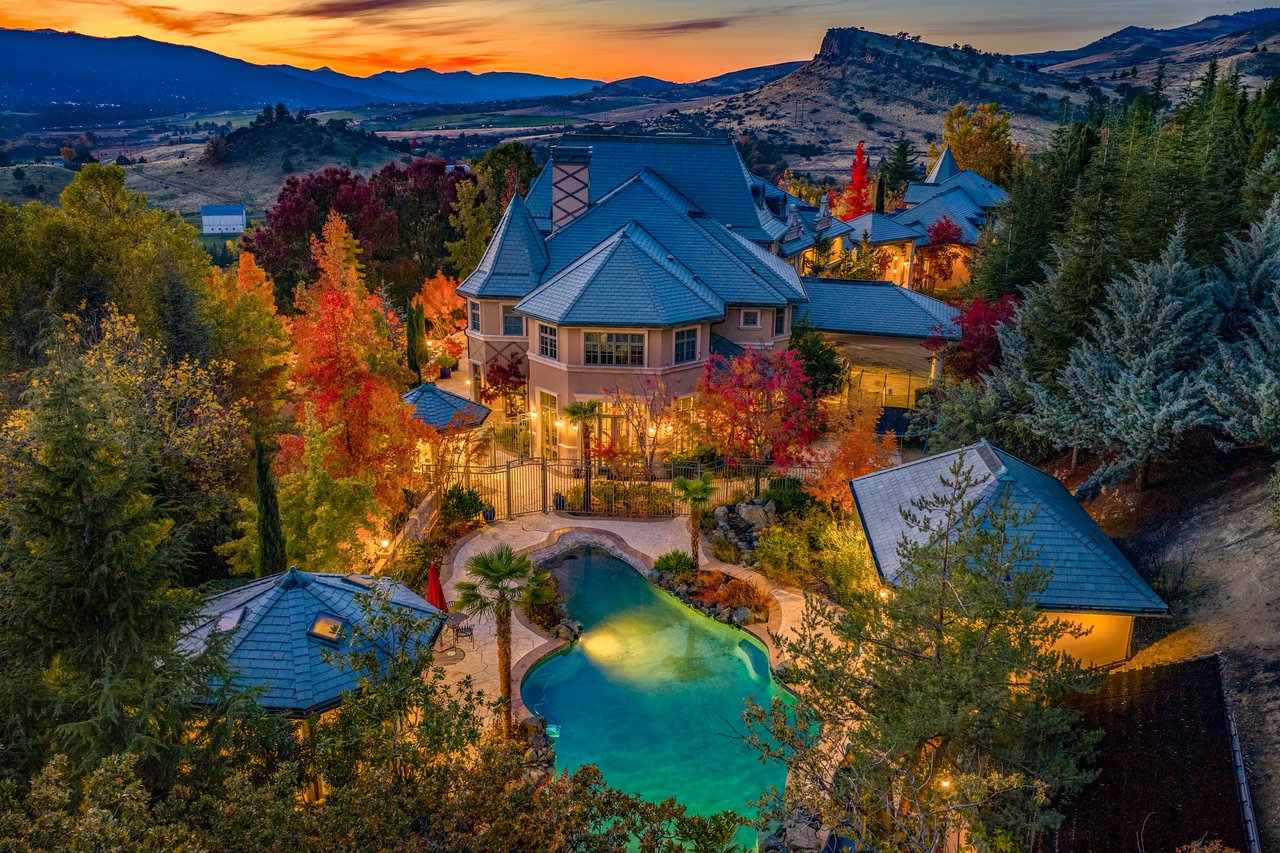
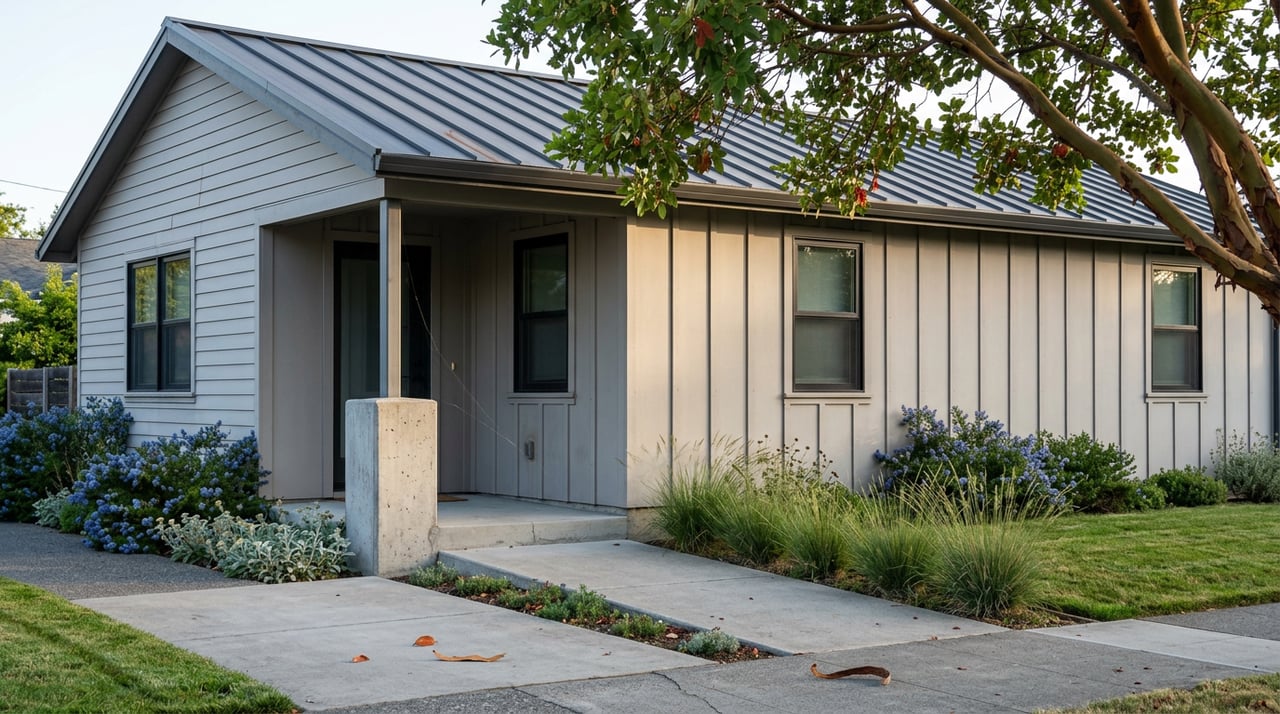
Every rebuilt lot adds a home to Talent's inventory that didn't exist in the same form five years ago, and a lot of those homes are smaller and more efficient than what they replaced. Currently active listings include a 704-square-foot single-level cottage from Ridgeline Builders' Aspen Place Cottages development, marketed as the town's newest community. A roughly 1,500-square-foot new build from Harmony Modern Homes is under construction with a completion date of September 2026. Suncrest Homes, which has built residences in Ashland and Talent since the early 1990s, has an Earth Advantage-certified home with an attached accessory dwelling unit on the market, pairing a 1,230-square-foot main house with a 504-square-foot unit above the garage. Cavanaugh Custom Homes has a build-to-suit offering on a 0.07-acre homesite on Willow Way, priced at $535,000 for a 2,031-square-foot plan.
Set a 704-square-foot cottage next to a 2,342-square-foot home in the Maitri subdivision or a larger property in Willow Springs Estates or Sweetbrier Estates, and you can see how a median calculated from whichever handful of these closes in a given month will jump around even if buyer demand stays perfectly steady. This isn't a market losing value. It's a market where the tape measure keeps changing.
Days on market is the number actually worth watching
If the median is too noisy to trust month to month, the more reliable signal sits one column over. Average time on market in Talent fell from 226 days to 53 days between October 2024 and October 2025, according to the same data that showed the alarming price drop. It compressed further to an average of 32 days by June 2026, and stood at a median of 62 days in July 2026, still 37 percent faster than the year before.
Homes selling faster while the median price bounces around is not the profile of a distressed market. It's the profile of a market absorbing new supply about as quickly as it arrives, which is a very different story than the one a single falling median suggests on its own.
The commercial rebuild is the real lagging indicator
Residential recovery has outpaced commercial recovery, and that gap matters if you're weighing Talent's longer-term trajectory rather than just this month's price tag. "The commercial rebuild is clearly further behind," Campbell said. "We've made progress, but there are still major gaps." Vacant lots remain visible along Highway 99 and through parts of downtown, five years after the fire.
The city's answer is the Gateway Project, a commercial and residential development planned for the southwest corner of West Valley View Road and Highway 99, which Mayor Darby Ayers-Flood has pointed to as central to Talent's next phase. As she put it in comments to Ashland.news, the undeveloped lots around town represent an opportunity to shape what comes next, even as the shops and gathering spots that give the town its character are still finding their footing.
There's also a manufactured housing story running in parallel that shapes the town's more affordable segment. After the fire destroyed all but 10 units of Talent Mobile Estates, two residents formed the nonprofit Coalición Fortaleza to help the park re-emerge as the Talent Community Cooperative, a resident-owned community. Partnering with the affordable housing developer Casa of Oregon, the group used a $7.5 million loan to purchase the land, with homes built to Energy Star standards qualifying for Energy Trust of Oregon incentives of $10,000 for a single-wide and $15,000 for a double-wide, according to reporting from the Oregon Capital Chronicle.
What this means if you're comparing Talent to Ashland or Medford
If you're weighing Talent against its neighbors, the single-month median on any one site is the least useful number in the comparison. Look instead at how long homes are actually sitting, whether the listing is new construction or pre-fire stock, and what subdivision or lot size you're comparing against. A 704-square-foot cottage and a 5-acre Maitri property will never belong in the same sentence about "the market," even though both show up in the same monthly average.
It also pays to ask directly whether a home you're considering was part of the post-fire rebuild, since that affects everything from the age of its wiring and insulation to how it's likely to be underwritten for insurance. A certificate of occupancy from the post-fire rebuild generally means current wildfire-resistant building codes and the kind of energy performance that carries real weight with insurers in Jackson County.
Talent isn't a market in decline. It's a market still assembling itself, lot by lot, five years after a fire that reshaped the town. The confusing headline numbers are a byproduct of that process, not a verdict on it.
If you're trying to make sense of what a specific listing in Talent, or anywhere else in the Rogue Valley, actually represents once you account for its age, lot, and construction history, Ryan Lamanna & Hunter Blackwell can walk through the comparables with you and separate the signal from the noise. Schedule a consultation when you're ready to look past the median.