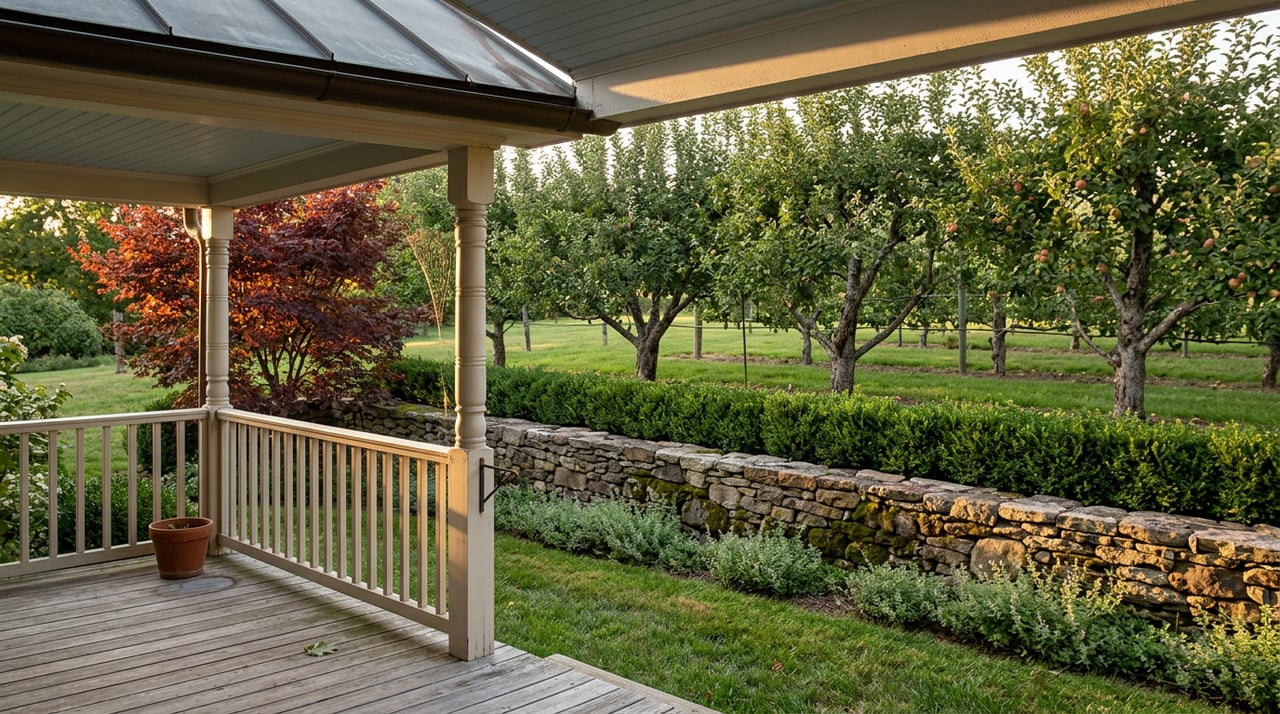
A listing sheet for a property outside downtown Ashland says "irrigation: TID." A buyer pictures a green orchard row, a productive garden bed, maybe pasture for a horse or two. What that note actually describes is a legal claim on a shared, seasonal, non-potable water system that the district delivering it will not promise to keep flowing. Those are two very different things, and 2026 is turning out to be the year the difference shows up in real time.
Two things people call "water rights"
Talent Irrigation District, known locally as TID, is the largest irrigation district in Southern Oregon, delivering water across roughly 16,300 acres and 3,000 landowners in and around Medford, Phoenix, Talent, and Ashland. The system draws from three federal reservoirs, Howard Prairie, Hyatt Prairie, and Emigrant Lake, and moves water through more than 130 miles of canals, including the Ashland Main Canal that runs past Tolman Creek Road on its way into town.
A property having a "TID water right" means a specific parcel is entitled to draw from that system during the irrigation season. It does not mean the property has a private well, a treated municipal connection, or any source of drinking water. The City of Ashland's own guidance is direct on this point: TID water is a non-potable supply meant for landscaping and irrigation, not household use, and the city cannot guarantee uninterrupted service because it doesn't control the canal system beyond the ditches inside city limits. TID sets delivery schedules, TID decides when the season starts and ends, and TID's federal contract explicitly shields the Bureau of Reclamation, the city, and the district itself from liability when drought or infrastructure problems cut deliveries short.
What Oregon law actually requires at closing
Buyers assume a water right is something they'll simply inherit along with the deed. Oregon law puts a specific obligation on the seller instead. Under ORS 537.330, once an offer is accepted on real estate that includes any land described in a water right, the seller must tell the buyer in writing whether a permit, transfer approval order, or certificate evidencing that right actually exists, and must hand it over at closing if it does.
That single requirement solves a problem that shows up more often than people expect on Southern Oregon acreage: a property that has used TID water for decades but whose paperwork was never updated, split correctly during a prior sale, or kept current with the district. If that documentation can't be produced, the water right attached to the parcel is harder to prove and harder to use with confidence.
Why 2026 is the season to actually ask this question
TID doesn't run on a fixed calendar. A normal season starts in mid-April and runs through September 30, but only if there's a sufficient water supply, and the district has said plainly that during drought conditions the season can start later and end earlier.
This year gave a clean example of exactly that. In April 2026, Jackson County Commissioners asked the governor to declare a drought for the county after an unusually dry winter left the district relying on water carried over from the 2025 season rather than fresh snowpack. TID had no firm start date at that point and was weighing a start as early as May 4 if the dry weather held, or May 11 if more rain came in to delay it, telling patrons plainly that the earlier the season started, the earlier it would end. Canal flushing on the Ashland, East, Talent, and West laterals didn't begin until April 28, roughly two weeks later in the calendar than a wetter year would allow. The district kept issuing reservoir updates through mid-June and into early July as it tracked how the season was actually playing out.
None of that is unusual for TID. It's the same story the district has told in other dry years: carryover water gets drawn down faster because there's less snowmelt behind it, and every dry winter eats into the cushion the next season needs. What it means for a buyer evaluating a property this year is straightforward. A "has TID rights" note on a listing sheet describes the same legal entitlement in a wet year and a dry one. The acre-feet of actual water behind that entitlement do not.
What the ditch can and can't do for a property
| City water connection | TID irrigation right | |
|---|---|---|
| Source | Treated municipal supply | Howard Prairie, Hyatt, and Emigrant reservoirs, delivered by open canal |
| Potable | Yes | No, not without treatment |
| Season | Year-round | Roughly mid-April through September 30, if supply allows |
| Guaranteed delivery | Utility service contract | Not guaranteed; can be delayed, reduced, or shortened by drought or infrastructure issues |
| Who maintains the hookup | City | Property owner maintains pumps, valves, and laterals; the city maintains only the ditch inside city limits |
A property can have both, one, or neither. The garden, orchard, or pasture use a buyer is picturing depends on the second column, not the first, and the second column is the one nobody guarantees.
The forfeiture clock nobody mentions at the open house
There's a second wrinkle that matters most on properties that have sat unused or under-farmed for a while. Under Oregon water law, a water right that isn't put to beneficial use for five or more consecutive years is presumed forfeited and can be subject to cancellation, with limited exceptions such as municipal rights. That standard applies broadly to Oregon water rights, TID rights included.
This is the kind of detail that never shows up on a listing photo. A charming older property with an overgrown orchard and a ditch running along the property line might still carry its TID right on paper. Whether that right is still valid depends on whether it has actually been used, and recently. A buyer planning to revive an orchard or start a market garden should ask for proof of recent use before assuming the right is intact, not after closing.
If you want to sever or move the right
Some buyers want the opposite: to move a water right off a parcel, split it between two lots, or transfer it to a different piece of land under the same ownership. TID's own transfer application process lays out what that takes. The applicant pays a $750 non-refundable filing fee to process the transfer through the Oregon Water Resources Department, plus a district charge of $220 for the first five acres and $30 for each additional acre, money the district puts toward upgrading its facilities. The applicant also needs to show the right has actually been used within the last five years, provide a map drawn by a licensed surveyor or Certified Water Rights Examiner, and commit to sprinkler irrigation or an equivalent conservation method going forward. None of this happens quickly, and the district reviews every transfer request case by case with no guarantee of approval.
For a buyer thinking about splitting an irrigated parcel or moving water to a different building site, that timeline and cost belong in the offer strategy, not in a surprise after mutual acceptance.
Before writing the offer
A short list worth working through with a buyer's agent before submitting an offer on any Ashland-area property with a ditch or TID note attached:
- Ask the seller for the actual permit, transfer approval order, or certificate evidencing the water right, as required under ORS 537.330, and confirm it will be delivered at closing.
- Ask whether the right has been used within the last five years, since non-use can trigger a presumption of forfeiture.
- Confirm whether the property has a separate domestic well or municipal connection, since TID water is not treated for drinking.
- Ask which lateral serves the parcel and whether this season's later start affected delivery timing.
- If a transfer or severance is part of the plan, budget for the OWRD filing fee, the district's per-acre charge, and a surveyor or Certified Water Rights Examiner.
A few straight answers
Does every property in Ashland have a TID water right? No. TID serves specific parcels across Medford, Phoenix, Talent, and Ashland with certificated rights attached to those parcels, not the city as a whole.
Can TID water be used inside the house? No. It's a non-potable irrigation supply and would need treatment before any domestic use.
What happens if TID shuts off water mid-season? The district's federal contract states that neither the Bureau of Reclamation, the city, nor TID is liable for shortages caused by drought, operational limits, or forecasting problems, so a mid-season reduction is a real possibility patrons agree to accept when they sign up for delivery.
A ditch running along a property line is one of those details that looks simple until someone actually tries to use it. Understanding what it promises, and what it doesn't, before an offer is written saves a conversation nobody wants to have during an inspection period.
If you're evaluating a property in Ashland with acreage, an orchard, or a garden that depends on irrigation water, Lamanna Blackwell Group can walk through what's actually documented on the parcel before you write an offer. Schedule a Consultation to get started.