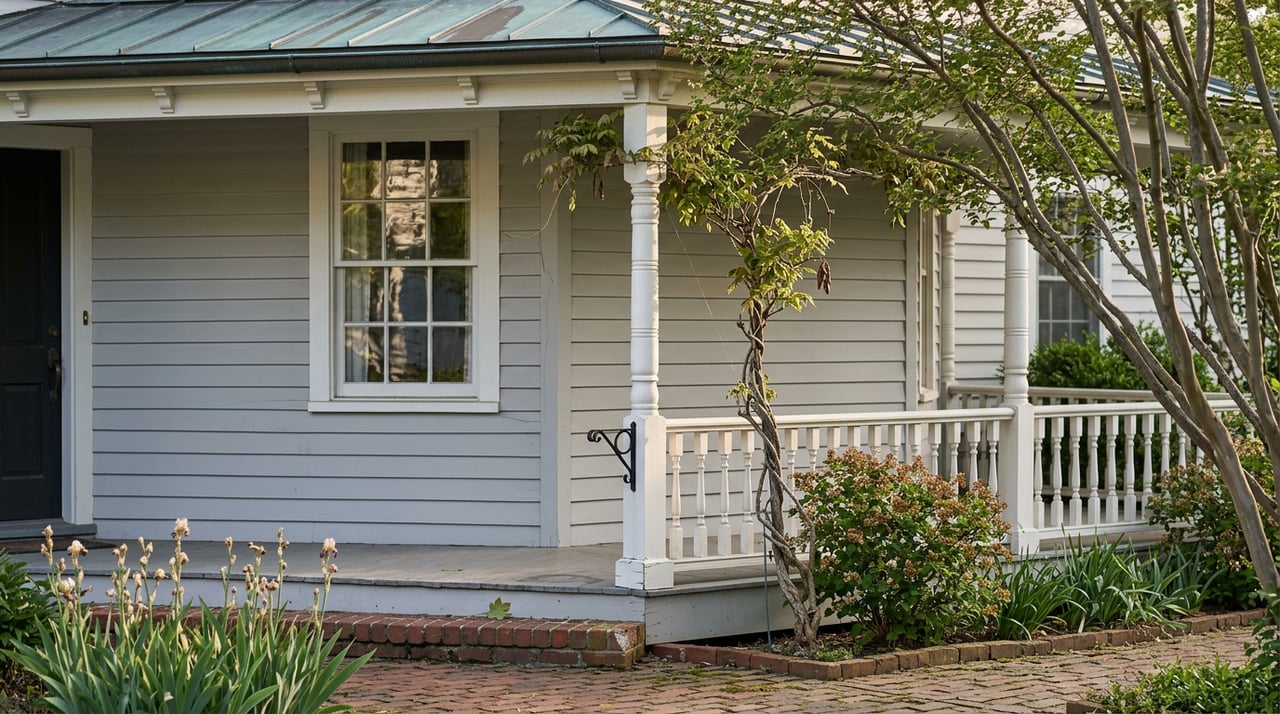
In March 2018, a development group called Veritas Group brought Jacksonville's Historical and Architectural Review Commission a plan for a three-story townhome on a 17-foot-wide lot next to the fire department at 150 E. C Street. The pitch was straightforward: the design met current building codes, and the C Street corridor was headed toward taller infill anyway. HARC didn't see it that way. After a two-hour hearing, the board voted 5-1 to deny the Certificate of Appropriateness, siding with neighbor Lois Cartier and a room full of residents who argued the height and design simply didn't fit the block.
That vote is worth remembering if you're buying or selling inside Jacksonville's National Historic Landmark District today. It shows the review process here has real teeth. But the more useful lesson isn't about townhomes. It's about a question most buyers never ask until they're already under contract: which rulebook applies to the house they're buying, and why the answer has nothing to do with how old or historic it looks.
Two Chapters, One District
Jacksonville's development code splits residential design review into two separate chapters, and the dividing line isn't age, style, or curb appeal. Chapter 18.10 governs "Historical Residential" properties, meaning homes listed on the city's historic survey. Chapter 18.11 governs "Contemporary Residential" properties, the code's label for every house inside the district boundary that isn't on that survey, regardless of when it was built. That distinction comes directly from the city's own Certificate of Appropriateness application requirements.
In practice, that means a 1960s ranch that's never been touched can sit under 18.11 right alongside new construction, while a modest 1890s cottage a block away, if it made the survey, answers to 18.10. Two houses facing each other across the same street can be working from different rulebooks, and the deciding fact is a line item on a list most buyers never see before closing.
The code is candid about the tension this creates. Title 18 asks new construction to read as new while still belonging on the block: "To preserve the integrity of the National Historic Landmark District, contemporary dwellings must be clearly differentiated from, but compatible with, historic dwellings in their design details," according to the city's historic protection ordinance. It's a narrower needle to thread than most buyers expect walking in.
Where the Review Level Actually Comes From
The city keeps a specific reference map, produced in 2006, that assigns each parcel a review level based on its designation: Landmark Listed Resource, Contributing Historic Resource, Impact Area, Viewshed Resource, or general. That Historic Design Review Areas Map is what the Planning Department checks first, not the house's appearance.
The review level then determines how many standards a project has to clear:
| Review Level | Typical trigger on the map | What you must satisfy |
|---|---|---|
| Level I | Landmark Listed Resource, Contributing Historic Resource, or Impact Area | All 13 criteria, full HARC hearing |
| Level II | Viewshed Resource | Criteria 1, 7, 8, 10, and 13 |
| Level III | General designation | Criteria 1 only, staff-level review |
The same fence, porch rebuild, or window swap can clear as a quick staff sign-off on one lot and require a public hearing on the lot next door. Neither the buyer nor the seller can eyeball that difference from the sidewalk. It has to be checked against the parcel's actual designation.
What the Certificate Actually Restricts
Once a project needs review, Title 18 is specific about what won't pass. Exterior finishes have to be authentic to the era, not a modern stand-in, and the ordinance names its bans outright. Prohibited materials include:
- Scored plywood siding similar to T1-11
- Simulated wood pressboard
- Aluminum
- Steel
- Fiberglass
- Vinyl
Additions carry their own condition: any change has to be built so that, if removed later, "the original form and integrity of the structure can be easily recovered." That single sentence rules out a lot of the budget-siding and low-cost window shortcuts that would be routine anywhere else in Jackson County, and it's worth pricing into a renovation budget before an offer, not after.
The Calendar You're Actually Working Against
Level I review doesn't happen at a desk. It goes to a public hearing in front of HARC, and HARC runs on its own schedule, not a contractor's. City code requires the commission to meet at least four times a year, once each quarter, though the chair or three voting members can call a special meeting with written notice. If a closing lands in the wrong week of the quarter and the project needs Level I review, the next available hearing date can be months out rather than weeks.
This isn't theoretical. A June 2025 hearing on File No. 2025-048, a Certificate of Appropriateness for a new single-family dwelling, went through the same public process the C Street townhome did in 2018, according to the city's archived HARC agenda. New construction inside the district still lines up for a public vote. It doesn't get waved through because the surrounding market is active.
The Rulebook Is Being Rewritten While You Read This
None of the above is frozen in place. Jacksonville's Planning Department has a five-member citizen advisory committee working through a full rewrite of the Unified Development Code, Titles 15 through 18, the same titles that hold the historic protection rules described here. Mayor Donna Bowen's opening message for 2026 confirmed the broader municipal code revision, Titles 1 through 14, is nearing completion under Councilor Steve Casaleggio, while the historic and zoning titles continue under separate review by the Planning Department, as she wrote in her January 2026 update. The two-chapter system, the map designations, the criteria counts: all of it can shift before a buyer who closes today is ready to pull a permit next year. A secondhand summary from a neighbor or an older blog post isn't a substitute for confirming current status with the Planning Department directly.
Why the Rules Still Make the Town Worth Buying Into
None of this is bureaucracy for its own sake. Jacksonville was designated a National Historic Landmark District in 1966, and it holds more than 275 cultural, environmental, and historic resources today, according to the Advisory Council on Historic Preservation. The same commission that denied the C Street townhome is a large part of why the streetscape still looks the way buyers are paying a premium for. That investment continues in visible ways: the 1881 Old City Hall is being converted into a new history center, led by Historic Jacksonville, Inc. president Carolyn Kingsnorth, with a target opening in the summer of 2026, according to reporting from the Rogue Valley Times. The friction and the appeal come from the same source.
Before You Write the Offer
- Ask the Planning Department directly whether the specific parcel is on the historic survey (Chapter 18.10) or falls under the contemporary track (Chapter 18.11). Don't infer it from the house's appearance.
- Get the map designation for the lot before assuming a planned change qualifies for fast, staff-level Level III review.
- If a hearing-level review is likely, budget extra weeks against HARC's quarterly meeting minimum, not against a contractor's schedule.
- Confirm any planned siding, roofing, or window materials against the current prohibited list before finalizing a renovation budget.
- Check directly with the Planning Department on the status of the Titles 15-18 rewrite rather than relying on an older summary of the rules.
A Few Straight Answers
Does a house have to look historic to fall under Chapter 18.10? No. Chapter 18.10 applies only to properties listed on the city's historic survey. Appearance alone doesn't add a house to that list or remove it.
Can a HARC denial be appealed? Yes. An applicant has 14 days to appeal a HARC decision to the City Council, and if the Council upholds the denial, a further appeal to the Oregon Land Use Board of Appeals is available within 21 days.
Is a small repair reviewed the same way as new construction? The review level depends on the parcel's map designation, not the size of the project, so it's worth confirming with the Planning Department before assuming a minor repair is exempt.
Buying or selling inside Jacksonville's historic boundary is part real estate transaction, part land-use homework. The house you're touring is also a parcel with a designation, a chapter number, and a possible hearing date attached to it, and none of that shows up on a listing sheet. Ryan Lamanna & Hunter Blackwell work through that layer with clients before an offer goes in, not after. Schedule a Consultation to talk through what a specific Jacksonville property's review status actually means for your timeline and budget.